- The Secret Norwich Newsletter
- Posts
- Death by hanging.
Death by hanging.
Why is Norwich integral to the Salem witch trials?
Alright?
It’s been a while. As is obligatory for all British people, I got ill over Christmas. Now, fully recovered and with a bit more free time on my hands, I’m ready to continue our Sunday Service once more.
Given the bloodthirsty reprobates that comprise the Secret Norwich readership, it’d be rude not to talk about an infamous execution.
And they don’t get much more infamous than this.
Let’s talk about Bridget Bishop: A Norwich citizen who found herself caught up in the Salem witch trials.
(Btw, we’re running another Norwich Pub Tour on Sunday, 22nd February. Click the button below to join! ⬇️)

Bridget Bishop’s diary.
Unlike Bridget Jones, details on Bridget Bishop’s life are relatively hard to find. She was born Bridget Magnus in Norwich in 1632. It appears she married three times.
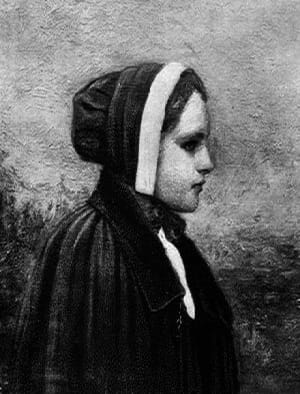
A lithograph of Bridget Bishop.
Her first marriage was in Norwich to a chap called Samuel Wesselby, in a now-defunct church near the Cathedral called St Mary in the Marsh. Samuel died six years later, but no foul play was suspected. I’m sure he was very nice, but he’s not an important player in this story.
Her second husband, Thomas Oliver, was more important (if this were a film, he’d almost certainly be played by one of Colin Firth or Hugh Grant).
He was born in England, and married his first wife, Mary, in Norwich as well. They moved to Boston, Massachusetts, in 1637 with their two children, but were forced to return to England in 1649 because Mary had a habit of making unpleasant public comments, which landed them both in trouble.
In 1666 - a bad year for England, all being told - he married Bridget. They moved back to Massachusetts, eventually settling in Salem.
Thomas died in 1679. This time, there was some scrutiny around his death, and Bridget was put on trial for witching him. She was ultimately acquitted, owing to a lack of evidence (which is ironic, given how this story ends).
Her third husband was Edward Bishop, who was a sawyer (a sawyer is literally someone who saws timber for a living). He was a wealthy American.
Some context.
The 1600s were rife with witchcraft accusations, but it’s not like those accused had to do anything particularly mystical. Anything from dressing unconventionally, to being a widower, to doing/saying the wrong thing in public could land you in court.
Unfortunately for Bridget, she ticked all of these boxes and more. She was a walking bingo card of “suspicious” behaviour.
Firstly, she “was in the habit of dressing more artistically than women of the village”, which presumably means she dressed like someone from Norwich, England, rather than someone from Salem, US. Perhaps it was the gaudy yellow and green that did it.
Secondly, two of her previous husbands had died.
Thirdly, she was a bit of a gossip. Her third husband (Edward) owned a pub, and Bridget took it upon herself to provide the evening entertainment. Whether it was regaling the guests with drunken stories of her ex-husband or - heaven forbid - playing the forbidden game of shovel board, Bridget was unafraid to live her best life.
Ultimately, she was accused of bewitching five young women and hauled into the courthouse on June 2nd, 1692.
The Salem witch trials had begun.
A flood of accusations.
Things got weird very quickly during Bridget’s trial.
Witnesses came forth with bizarre stories of Bridget’s wrongdoings. Several people claimed that “the shape of Bishop” would pinch, bite and choke them.
According to a bloke called Cotton Mather, who must’ve been a reliable expert because he wrote a book called “Wonders of the Invisible World”, anytime Bridget would look at someone during their trial, they would immediately be struck down.
A woman claimed that the apparition of Bishop had torn her coat, and, shock horror, her coat had been torn in that exact spot. A man claimed she had hit his child with a spade, too.
The cherry on top was the jury of women who discovered a third nipple (a telltale sign of witchcraft, apparently) on her body - a discovery that could not be verified during future inspections.
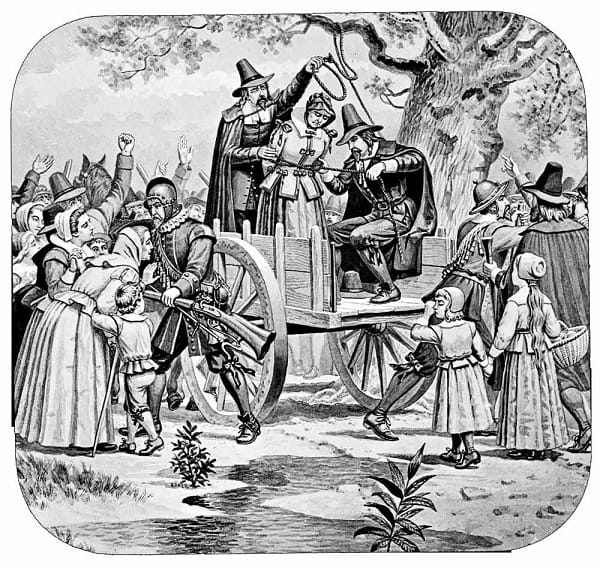
Regardless of the obvious ridiculousness of these claims, Bridget was sentenced to death by hanging just eight days after her trial began.
She was the first person to be executed at the Salem witch trials.
Why was she really accused?
The real reason for Bridget’s accusation and subsequent execution is, sadly, a tale as old as time.
It appeared that Bridget was due to inherit some of her second husband’s (Thomas - Colin Firth) estate, and his surviving family members were keen to prevent this.
Indeed, it’s likely Bridget didn’t even know the women she was accused of bewitching: A claim she would maintain throughout the trial.
“I never saw these persons before, nor I never was in this place before.”
It’s good to be back. If you enjoyed this email, please take a moment to respond to the poll below.
See you next week (promise),
Secret Norwich
Good email?I'll read every answer. |